

Glass cupboard doors work best when you plan them around visibility, storage, and the surrounding design. Start by deciding where the glass will have the most visual impact. Then choose clear, frosted, or textured glass based on how much you want to show. Cabinet proportions, interior finishes, lighting, and accurate measurements also shape the final result.
Plan glass around the room
Glass cupboard doors give cabinetry a lighter, more tailored look while keeping storage enclosed. You don’t need to use glass on every door. A few well-placed sections may break up a long cabinet run, create a display area, or define a bar or built-in.
Before choosing a pattern or finish, think about what sits behind the glass and what people will see from the main areas of the room. Those choices help the glass feel intentional. If you’re planning a broader update, explore more ways to incorporate glass into your kitchen design.
Decide what you want the glass to do
Start with the role you want the glass to play. You may want it to break up a wall of solid cabinetry or create a place to display dishes. It may also help define a coffee bar, beverage station, or built-in.
Try not to begin with a fixed number of doors. Look at the layout and decide where glass adds something useful. A glass cabinet with doors that clearly serve as a display area often looks more intentional than several unrelated inserts scattered around the room.
Once you know the purpose, choices about placement and visibility become easier.
Choose where to use glass cupboard doors
Placement has a large effect on the finished design. Look at the room from the places where you enter or spend the most time. Cabinets that sit in those sightlines often make strong candidates for glass.
In a kitchen, glass cabinet doors often work well:
- Beside a range hood or another focal feature
- Above a coffee bar or beverage station
- In the upper row of stacked cabinetry
- On a hutch or built-in section
- Around a window to break up solid cabinet fronts
You don’t need to make every upper cabinet match. A defined group often gives the glass more purpose and leaves concealed storage for items you don’t want on display.
Decide how much you want to see through the glass
Visibility should guide the glass choice. Think about what the cabinet holds before choosing a finish.
Clear glass for full visibility
Clear glass suits cabinets that hold dishes, glassware, serving pieces, or collections you want to see. It keeps the view open and makes the cabinet interior part of the room.
It also exposes crowded shelves and everyday packaging. Use it where you already keep the contents reasonably organized.
Frosted glass for softer coverage
Frosted glass blurs the view and gives you more flexibility with everyday storage. You still get the lighter look of glass without putting every object on display.
Textured glass for partial visibility
Reeded, seeded, and other textured options soften the view while adding detail to the door itself. The glass in a glass cabinet with doors affects both visibility and visual texture.
View samples against the actual cabinet finish whenever possible. A pattern may look subtle on its own, but feel much stronger once it repeats across several doors.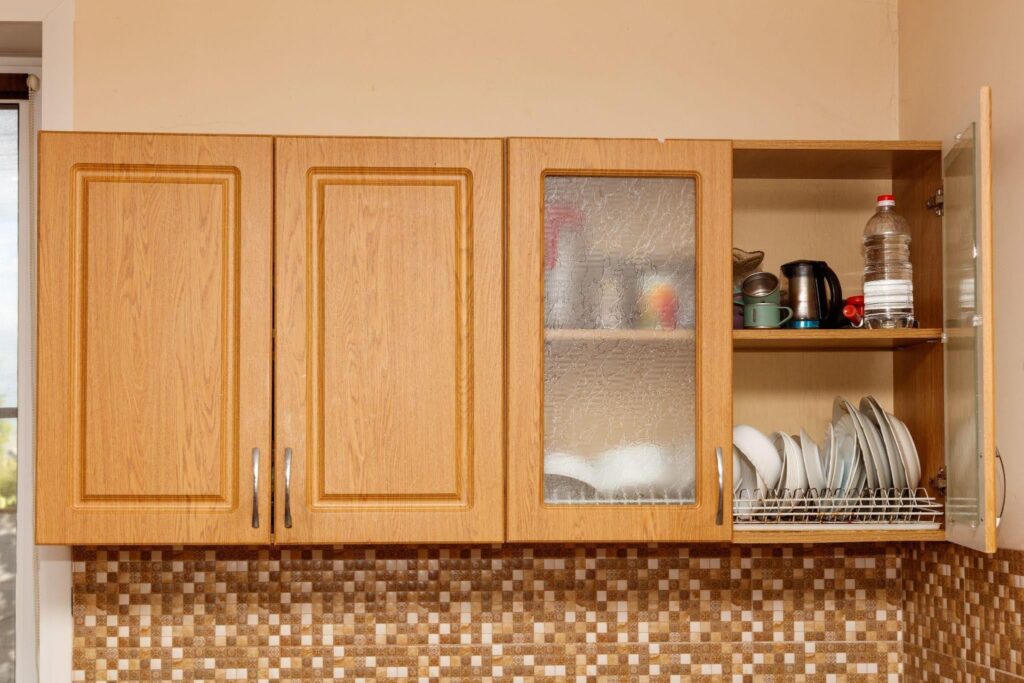
Design the whole cabinet
Once you add glass, the inside of the cabinet becomes part of the design. Look at the back panel, shelf finish, and shelf placement. A contrasting interior may highlight what you display, while a matching finish creates a quieter look.
Lighting also deserves early consideration. The National Kitchen & Bath Association’s 2026 Kitchen Trends Report found strong interest in interior cabinet lighting among kitchen professionals. If you want lights inside glass cupboards, plan their location before the project reaches its final stages. Solid shelves may create shadows, while exposed light strips may distract from the display.
Also, look at nearby windows and overhead fixtures. Clear glass reflects more of the room. Textured glass breaks up reflections and softens the view.
Use glass cupboards throughout the home
Pantries and beverage areas
A pantry offers a lower-commitment way to introduce glass. Frosted or textured inserts work well when you want lighter cabinetry without showing every pantry item.
Built-ins, hutches, and sideboards
Glass inserts may give an existing built-in or furniture piece a more open look without changing its overall character. Use them to display books or collections while keeping those items behind a door. A glass cabinet with doors also works well in dining or living spaces where you want to display storage without open shelving.
Bathroom storage
Glass cupboard doors may suit linen cabinets or selected vanity storage. Clear glass fits neatly arranged items, while frosted or textured glass gives personal storage more privacy.
For unusual applications, New Concepts handles custom glass projects tailored to the opening and intended use.
Why homeowners choose glass cupboard doors
Glass changes the visual weight of cabinetry without removing enclosed storage. It may break up a long cabinet wall, create a defined display area, or add texture to a simple door style.
The strongest designs use glass for a clear reason, so decide what you want the cabinet section to do before choosing the glass.
Common design mistakes to avoid
A few planning mistakes may keep glass cabinet doors from looking as clean as expected.
- Choosing clear glass without considering the contents. Clear glass puts crowded shelves and everyday packaging on display. Choose more coverage for a softer view.
- Spreading glass around randomly. Grouping glass doors within a defined section usually creates a more intentional look than placing isolated doors around the room.
- Ignoring the cabinet interior. Shelf edges and back panels become more noticeable once you add glass, so treat the inside as part of the finished design.
- Choosing texture from an online image alone. Pattern scale and transparency often look different once the glass sits against your actual cabinetry.
- Adding lighting too late. Cabinet construction and shelf placement affect where lighting works best, so plan it early if you want illuminated glass cupboards.
What to know before adding glass to existing cabinets
Some cabinet doors adapt to glass inserts more easily than others. Framed doors with a center panel often offer a practical starting point, but the remaining frame still needs enough support around the opening.
Before converting solid doors into glass cabinet doors, review the door construction and measure each opening carefully. The opening also needs the right glass type and thickness.
In some situations, a glass professional may recommend tempered glass for added safety. The U.S. Consumer Product Safety Commission explains that tempered glass breaks into smaller, fragmented pieces rather than larger shards when it fails.
A professional glass shop may also help determine the edge finish and how the insert will sit within the existing frame.
FAQ
Where should you put glass cupboard doors in a kitchen?
Start with cabinets that sit in clear sightlines or define a feature area. Upper cabinets beside a focal point, stacked cabinetry, and beverage stations often provide natural places to use glass.
Do all upper cabinets need glass doors?
No. Selective placement creates contrast and preserves concealed storage. Use glass where it serves a clear display or design purpose.
What type of glass works best for cabinet doors?
Clear glass offers the most visibility. Frosted glass hides more detail, while reeded and other textured options provide partial coverage. Choose based on what sits behind the glass and how much you want to see.
Do glass cupboards always need decorative items inside?
No. Everyday dishes, glasses, or serving pieces work well too. Choose the visibility level around what you store.
Is it possible to add glass to existing cabinet doors?
Often, yes, although the door construction determines the best approach. A glass professional should review the opening and take accurate measurements before fabrication.
Plan your cabinet glass with New Concepts Glass Design
Glass works best when it fits the cabinet and the surrounding room. Placement, visibility, lighting, and the existing door construction all shape the finished result.
New Concepts Glass Design helps Utah homeowners choose glass that supports the way they use their cabinetry and fits the opening cleanly. If you’re considering new inserts or updating existing doors, contact New Concepts Glass Design to discuss your project and get a free estimate.