
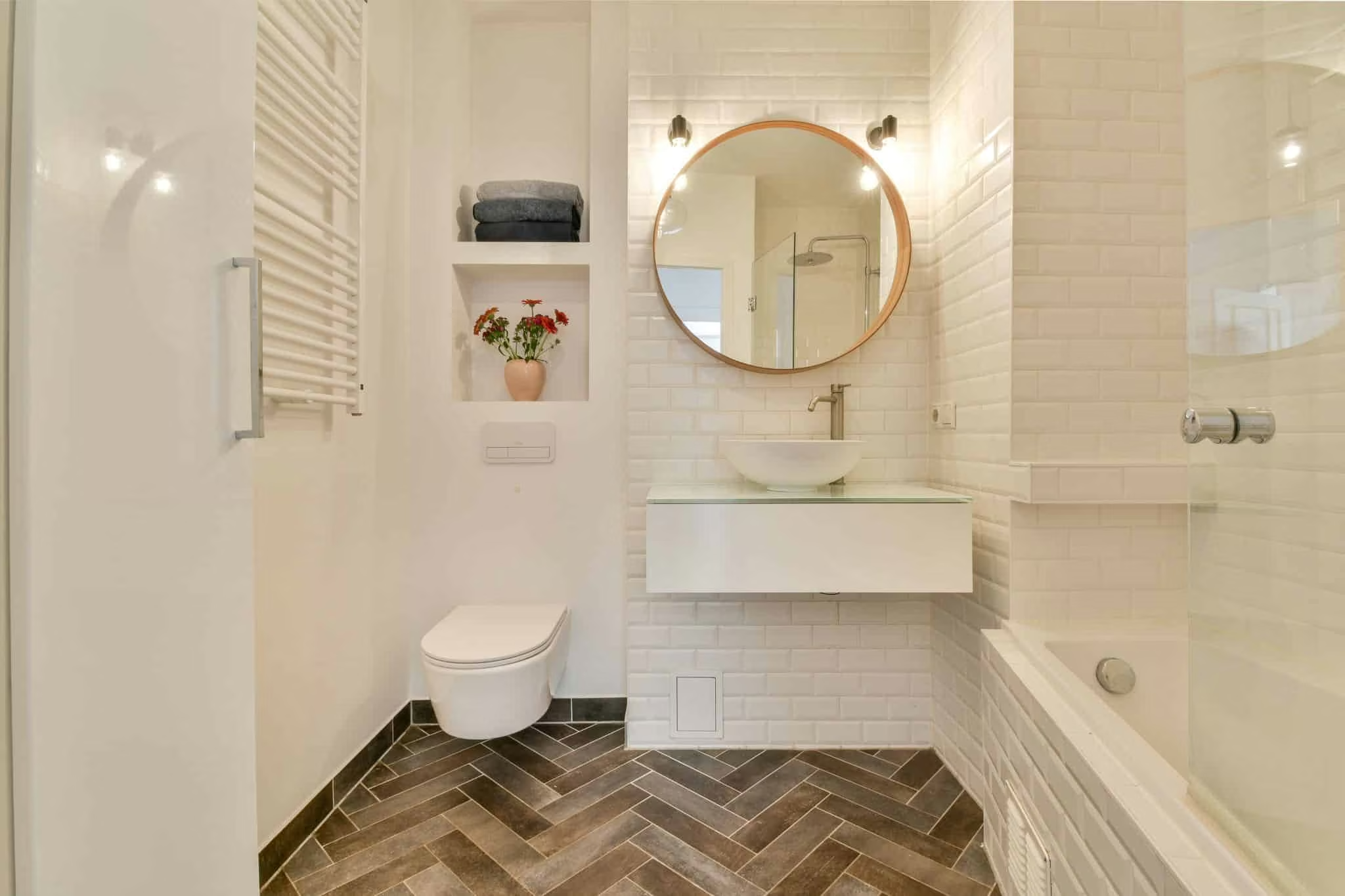
Custom mirrors give bathrooms and entryways a finished look when their size and shape suit the wall. Popular bathroom mirror ideas include frameless panels, arched designs, and beveled edges. In an entryway, a tall or oversized mirror reflects available light and provides a convenient spot to check your appearance before heading out.
Choose a mirror that fits your space
When you’re choosing a new vanity, it’s easy to overlook the mirror’s proportions until it’s up against the wall. A narrow mirror above a wide sink might feel out of place. One that extends too close to a light fixture could look crowded. Entryway mirrors also need to work around doors and furniture. That’s where custom glass offers greater flexibility with sizing and design. The best bathroom mirror ideas start with the space you have, then build on the look you want. Here’s how to choose a style that looks natural in your home and serves you well every day.
Why choose a custom mirror for your home?
Standard mirrors work well when their dimensions suit the room. But a vanity between two walls or an entryway with an unusual ceiling height may leave you searching for a size that stores don’t carry. A custom bathroom mirror lets you choose dimensions that fit the available space and line up with nearby fixtures.
Choosing custom glass also gives you flexibility with the shape and edge treatment. Perhaps you want a wide, frameless mirror that follows the countertop, or an arched mirror that fits above a narrow console. Planning these details around the room helps the finished mirror look like it belongs there.
Bathroom mirror ideas that complement your space
Look at the whole vanity wall before choosing a shape. The mirror should work with the lighting and suit your daily routine.
Frameless mirrors for a clean finish
A frameless mirror keeps the attention on the vanity and surrounding finishes. Its edges create a neat outline without introducing another material. This works especially well when the tile already has a strong pattern. Leave enough room around wall lights and cabinets so the mirror doesn’t look squeezed into place.
Arched and oval mirrors for softer lines
Bathrooms feature plenty of straight edges, from countertops to tile joints. An arched mirror introduces a gentle curve and draws your eye upward, especially when the wall is generously tall.
Oval and pill-shaped mirrors have a similar effect. Their narrower profile works well over individual sinks, particularly when two fixtures share a long countertop. Check the reflection area before choosing a slim shape.
Oversized mirrors for an open feel
A large mirror reflects a wider portion of the room, helping a compact bathroom feel less enclosed. One continuous panel above a double vanity also provides both users with plenty of reflective space.
Look at what’s opposite the mirror. A window or attractive wall adds to the effect, while clutter may be less appealing. The available wall should guide the dimensions.
Beveled-edge mirrors for subtle detail
A bevel creates an angled border that catches light differently from the main mirror surface. It adds definition without a separate frame, suiting bathrooms with both traditional and contemporary details.
A narrow bevel looks restrained; a wider one creates a stronger border. Compare samples beside your vanity finishes rather than relying on close-up photographs.
Custom shapes for tricky layouts
Sometimes the wall suggests the design. A sloped ceiling or closely spaced sconces might make a standard rectangle awkward. A custom bathroom mirror gives you flexibility without sacrificing balanced proportions.
Before choosing an unusual outline, check the reflection’s usability. An interesting silhouette still needs to work for everyday routines.
Custom mirror ideas for entryways
Tall mirrors for narrow entryways
A tall mirror makes good use of vertical wall space and gives you a nearly full-length reflection. In a narrow entryway, it reflects light from windows or nearby rooms without taking up floor space.
Choose a spot away from the door’s swing. If people carry bulky items through the entry, ask about secure mounting and appropriate safety features.
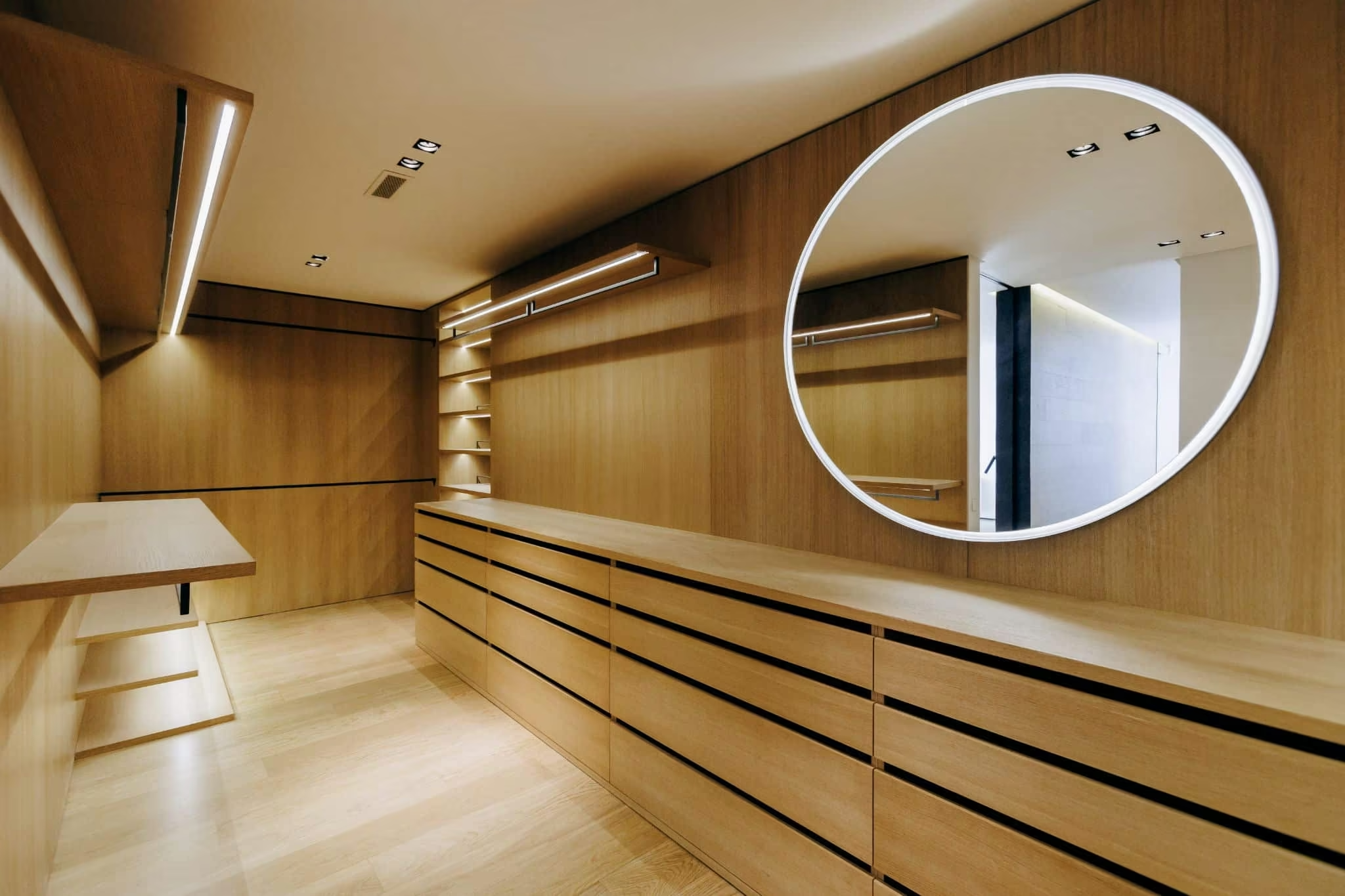
Oversized mirrors above console tables
A wide mirror above a console visually connects the furniture and the wall. Try centering the mirror over the console rather than the entire wall.
A tiny mirror over a broad console may look disconnected, while a very wide one could crowd nearby trim. Leave space for anything you plan to keep on the tabletop.
Arched and organic shapes
An arch pairs naturally with the straight edges of a console. Organic outlines suit simpler entryways where the mirror serves as the main feature.
A decorative wall mirror works well as a focal point in an entryway. Consider how the shape looks from the front door and how it fits with nearby furniture.
How to choose the right mirror size and placement
As you compare bathroom mirror ideas, start with measurements rather than a product photo. Note the wall width and vanity or console dimensions, then check nearby light fixtures. Look for doors that might need clearance.
For a double vanity, one large mirror creates a shared reflection and a continuous look. Two separate mirrors define each sink area, leaving room for sconces between them. Neither arrangement suits every bathroom; the sink positions and lighting often make the decision easier.
Everyone who uses the mirror should see themselves without having to lean or stretch. For a custom bathroom mirror, mark the proposed outline with painter’s tape. Step back and check it from the doorway.
In an entryway, stand where you normally pause to put on a coat or pick up your keys. Check what the mirror will reflect from that position. A pleasant reflection won’t help if you have to stretch to use the mirror.
Choosing mirror edges and decorative finishes
Mirror edges affect the finished look. A polished edge looks smooth and understated on a frameless design. A beveled edge creates a reflective border for a little extra detail.
Shape also influences the effect. A rectangular mirror creates clean alignment with cabinetry, while a curved outline softens the surrounding geometry. For an entryway, a decorative wall mirror with an interesting edge may provide enough detail without a heavy frame.
Ask to see available samples beside your paint or tile. Confirm the edge treatments and shapes with your glass professional before choosing a design.
What affects the cost of a custom mirror?
Similar-sized mirrors may have different prices. A straightforward rectangle typically requires less shaping than a complex outline, while beveled edges involve additional finishing. Larger panels also call for careful handling and an appropriate mounting plan.
Before requesting an estimate, photograph the wall and take approximate measurements. Include the vanity width and any fixtures that might limit the mirror’s size. The glass team will use those details to discuss possible options, then confirm the dimensions before fabrication.
What to consider before installing a custom mirror
Large mirrors require adequate support, so the installer should assess the wall and mirror loads before installation. Following proper mirror mounting and safety guidelines helps keep the glass secure, especially in areas where someone might accidentally strike it.
Bathrooms introduce another concern with moisture. Steam and repeated condensation may reach the mirror’s edges and damage its backing over time. Proper ventilation and careful mirror installation help protect the reflective surface and reduce the risk of moisture damage.
Run the bathroom fan during showers and keep cleaners away from the mirror’s lower edge. Finish nearby tile or cabinetry work before taking final measurements, and discuss wall conditions and mounting requirements with your custom glass installer before moving forward.
Common custom mirror mistakes to avoid
A few common choices lead to a mirror that feels awkward or proves inconvenient in daily use:
- Choosing size by appearance alone. Measure the available wall and check the reflection at a comfortable standing height.
- Ignoring existing sconces. Check light placement early so the mirror doesn’t crowd fixtures or create uneven spacing.
- Overlooking the reflected view. Notice whether the mirror faces a window, a busy shelf, or an area you’d rather keep out of sight.
- Picking an unusual shape without checking function. Make sure the useful reflection area suits the people who’ll use it.
- Leaving mounting decisions until the end. Discuss wall conditions and mirror weight before you finalize a large design.
FAQ
What size mirror should I choose for my bathroom vanity?
Consider the vanity width and nearby fixtures. Choose dimensions that suit the sink area and give users a comfortable reflection. Check the wall before settling on a size.
Should I choose one large mirror or two smaller mirrors for a double vanity?
One large mirror creates a shared reflection. Two smaller mirrors define each sink area. Let the sink positions and sconce layout guide your choice.
Are arched mirrors a good choice for modern bathrooms?
Yes. An arch softens straight tile and cabinetry lines. Choose simple edges for a contemporary look and check that the height suits the wall.
What mirror works best in a narrow entryway?
A tall mirror offers a useful head-to-toe view. Keep it clear of door swings and check what it reflects from the entrance.
Is a custom bathroom mirror worth the extra cost?
Consider custom fabrication when standard sizes leave awkward gaps or conflict with lighting. It also offers control over shape and edges. Balance those benefits against your budget.
What’s the difference between polished and beveled mirror edges?
A polished edge creates a smooth outline. A beveled edge slopes toward the perimeter, forming a reflective border. Consider the room’s style when choosing.
Where should I hang a decorative wall mirror in my entryway?
Try placing it above a console or on an open wall. Check the viewing height and leave room for doors to swing freely.
Why do bathroom mirrors develop black spots around the edges?
Moisture may damage the reflective backing and create dark areas near the edges. Ventilate the bathroom and keep cleaning liquids off exposed edges.

Plan your mirror project with New Concepts Glass Design
A well-chosen mirror fits the room and complements the surrounding finishes. Whether you prefer a broad, frameless panel in the bathroom or a decorative wall mirror near the front door, start by considering how you’ll use the space every day.
New Concepts Glass Design helps Utah homeowners work through custom glass details with careful measurements and practical design guidance. If you’re considering a mirror for your bathroom or entryway, contact New Concepts Glass Design to discuss your ideas and request a free estimate.