
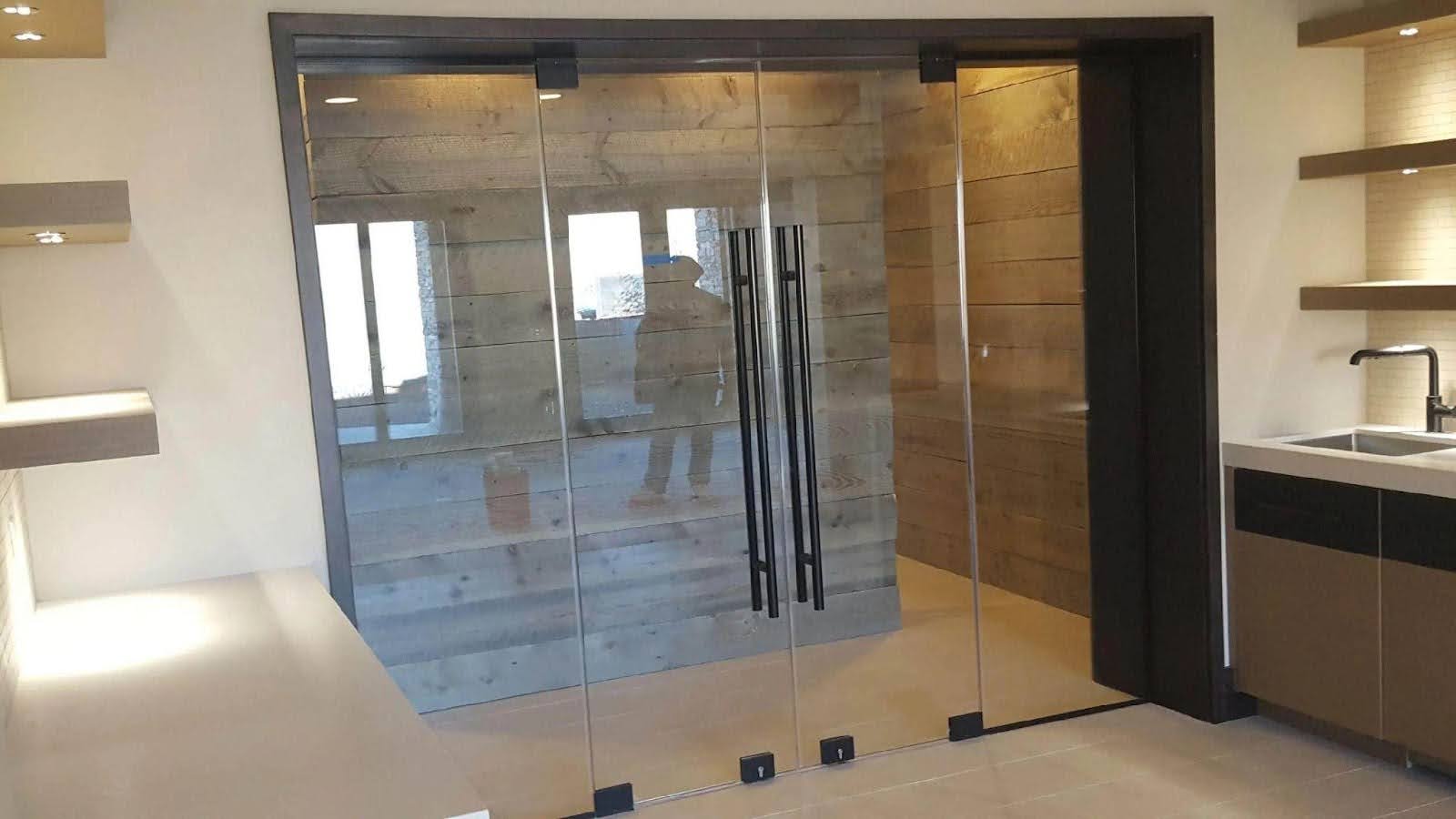
Glass wine cellars use architectural glass to create a climate-controlled space that protects your collection while showcasing it as a design feature. The right glass for wine cellar applications helps maintain stable temperature and humidity, and thoughtfully planned wine cellar glass walls deliver a clean, modern look that elevates kitchens, basements, and entertaining spaces.
Raise a glass to a cellar that performs as beautifully as it looks
A great wine cellar should preserve your bottles while also making a statement. That’s why more homeowners are choosing glass for their wine cellars. Designing a glass wine cellar is more than picking panels and hardware. If the cooling plan is off, seals are weak, or lighting runs hot, you end up with fogging, condensation, and even spoiled wine.
In this guide, you’ll learn nine practical steps to plan a cellar that looks stunning, performs reliably, and fits your space and budget. From layout and racking to ventilation and door details, we’ll cover what matters most.
Table of contents
Raise a glass to a cellar that performs as beautifully as it looks
9 steps to designing the perfect glass wine cellar
Examples of glass wine cellars for different spaces
Benefits of wine cellar glass walls
Key design benchmarks for a high-performing wine cellar
Premium features and materials that elevate a glass wine cellar
Ready to design a high-performing glass wine cellar with New Concepts Glass Design?
What is a glass wine cellar, and why does design matter?
A wine cellar is only as good as its ability to create a stable environment for long-term storage. The difference with glass wine cellars is that the enclosure becomes part of the architecture — a functional display that lives under a staircase, beside a kitchen, or as a feature wall in a finished basement.
The goal is to protect wine from heat swings, overly dry air, excess humidity, UV exposure, and vibration. A proper design begins with the environment, followed by the visuals. The best-performing cellars are designed around the cooling plan first, then refined with glass, lighting, and hardware that support the environment.
When you choose the right glass for a wine cellar, you get a clean look and dependable storage. Rushed detailing turns wine cellar glass walls into the weak point.
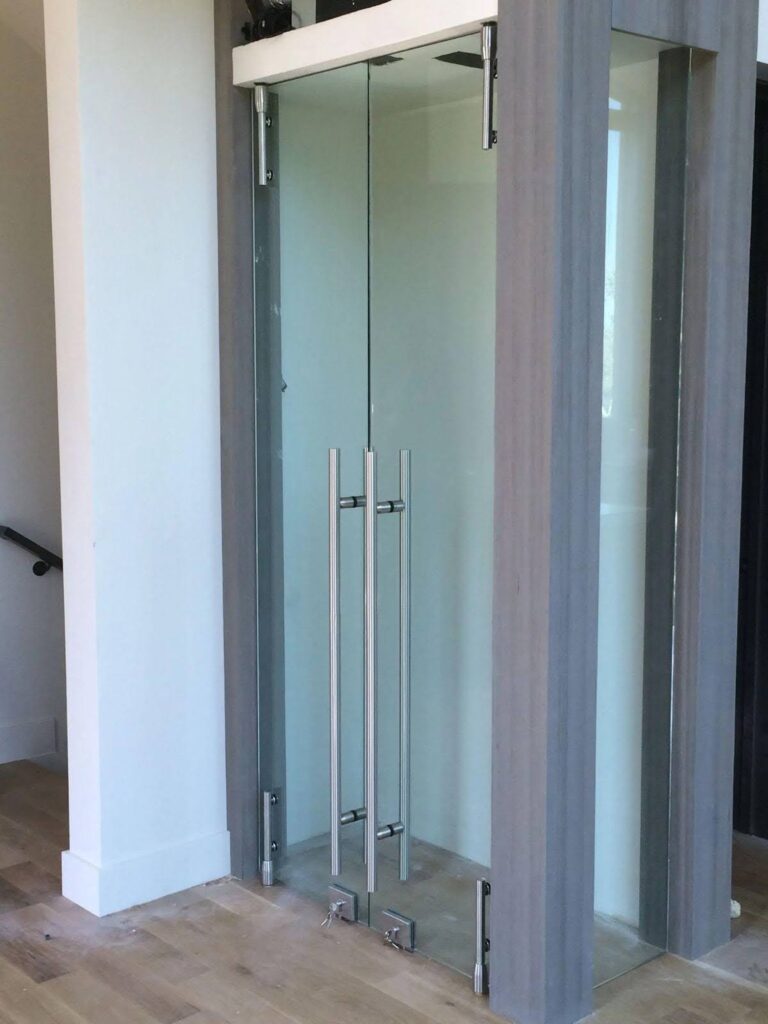
9 steps to designing the perfect glass wine cellar
1. Choose the right location
Pick a spot that naturally supports temperature stability. Basements, interior walls, and under-stairs areas often work well because they’re less exposed to sunlight and exterior temperature changes. Avoid placing the cellar against a hot mechanical room or directly under strong HVAC supply vents that create drafts and humidity swings.
2. Define your collection size and growth plan
Be honest about what you own now and what you want the cellar to hold in three to five years. Plan for a mix of standard bottles and larger formats if you collect Champagne, magnums, or specialty shapes. Capacity planning impacts the room size, racking density, and cooling load.
3. Decide how “display-forward” the design should be
Some homeowners want a subtle storage room with a glass front. Others want a showpiece that anchors the main living space. Consider whether you prefer a full enclosure, a single glass wall, or multiple glass sides. The more visible it is, the more critical the lighting and finish choices become.
4. Plan climate control before you choose finishes
Cooling isn’t an accessory — it’s the foundation. Decide whether you’ll use a self-contained unit or a ducted system. Make sure there’s a realistic path for ventilation and service access. If the unit is difficult to reach, maintenance gets postponed, and performance suffers. Consider noise and vibration when you locate the cellar near a living area.
5. Select the right glass specification for performance
The best glass for wine cellar builds often involves insulated configurations when temperature stability is the priority, along with seals to reduce condensation. Consider low-iron options for clarity, coatings that support thermal performance, and safety-focused construction based on the layout. Your fabricator should confirm thickness, edge work, and any cutouts well before production.
6. Engineer framing, supports, and tolerances
Minimal sightlines look amazing, but they must still be structurally sound. Decide whether you want a slim channel system, a framed approach, or a hybrid. Ensure floors and walls are level, because glass fabrication is unforgiving. The enclosure should account for building movement and expansion while keeping clean lines.
7. Choose a door system that seals well
Swing and pivot doors seal exceptionally well when designed correctly. Sliding doors are beautiful, but sealing is more challenging and requires careful detailing. Prioritize quality gaskets, thresholds, and hardware that feel solid and close consistently.
8. Integrate lighting that enhances the cellar without heating it
Use LED lighting with good color rendering so labels are readable and materials look rich. Avoid fixtures that produce heat or create hot spots near racks. Think in layers: a soft ambient glow plus targeted accent lighting for key displays. Dimmers and zones make the space feel premium and practical.
9. Finalize racking, materials, and installation details
Choose racking that fits your bottle mix and your design style — warm wood, modern metal, or mixed materials. Make sure finishes will handle controlled humidity without warping or corrosion. Before fabrication, confirm the accuracy of professional measurements and shop drawings.
Examples of glass wine cellars for different spaces
Under-stairs feature cellar
This option is a favorite for homes that want impact without sacrificing square footage. The angled geometry looks impressive behind clean glass, and the integrated LED shelving turns the collection into a work of art. This is a common use case for glass wine cellars, as it seamlessly merges storage with design in a high-traffic area.
Basement walk-in cellar with a full glass front
Basements tend to be thermally stable, which makes performance easier. A full glass front creates a showroom look, allowing you to optimize the interior for maximum capacity. With proper detailing, wine cellar glass walls stay clear and elegant.
Kitchen-adjacent display cellar
This is the “wow factor” option, but it demands great planning. Kitchens run warmer and experience more humidity swings. Higher-performance glazing, excellent seals, and a smart ventilation plan matter here. Select glass for wine cellar applications that provide visibility and temperature stability in a busy environment.
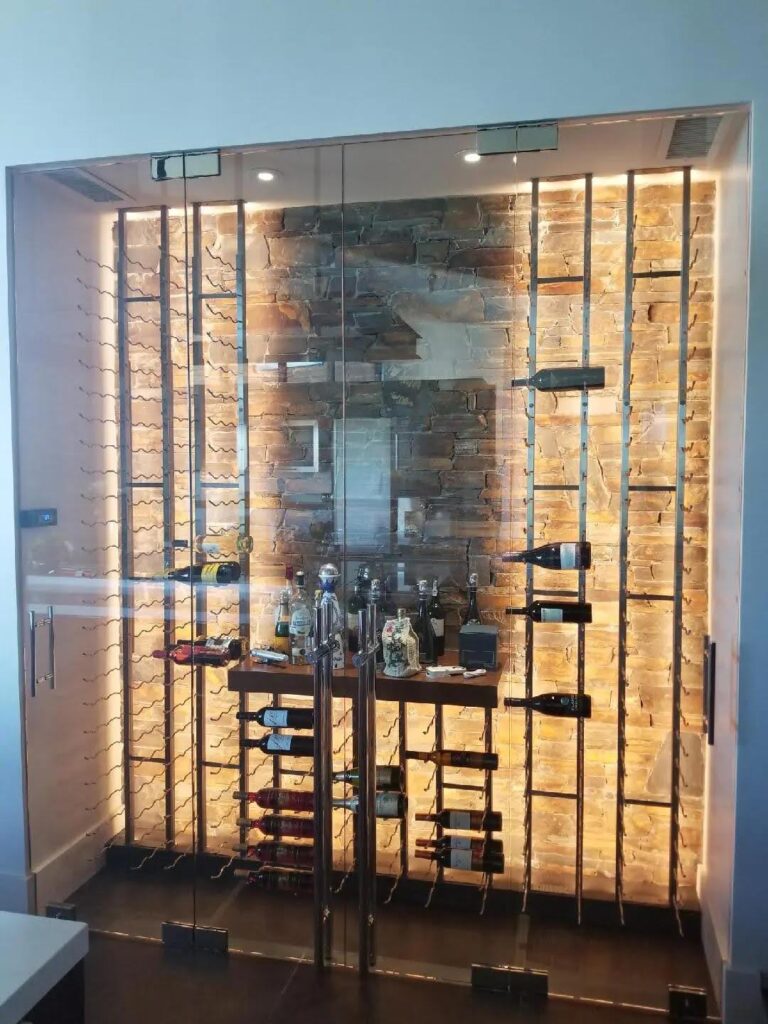
Great-room statement wall
For luxury builds, a floor-to-ceiling glass wall paired with symmetrical racking creates a dramatic architectural feature. In a highly visible space, hardware finish, lighting temperature, and alignment details become non-negotiable.
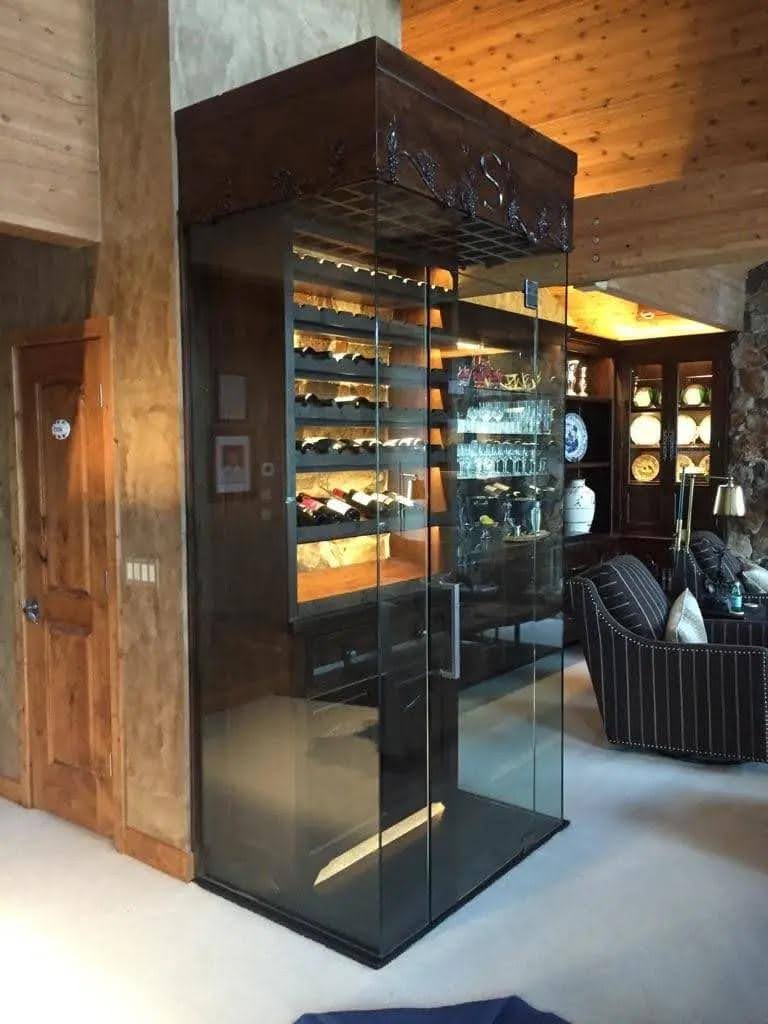
Benefits of wine cellar glass walls
- Creates an architectural focal point that elevates the entire room
- Makes your collection easy to organize, view, and enjoy
- Adds a luxury, built-in look without a major footprint increase
- Works across styles — modern, transitional, and industrial designs
- Supports entertaining by turning storage into a conversation piece
- Offers flexibility in clarity and aesthetics, from ultra-clear to subtle tinting
Homeowners love wine cellar glass walls because they’re equal parts function and design. Instead of hiding your collection in a back room, you get a space that feels intentional — and a feature you actually enjoy every day.
Common mistakes to avoid
- Designing the glass first and the cooling second
- Underestimating sealing and thresholds, which leads to condensation
- Choosing a door style that doesn’t close consistently
- Skipping service access for the cooling unit
- Using lighting that introduces heat into the cellar
- Not planning racks for real bottle shapes and future growth
When these mistakes happen, homeowners often blame the glass. In reality, most issues stem from the surrounding system — not the enclosure itself.
Key design benchmarks for a high-performing wine cellar
Use these benchmarks as planning targets when coordinating with your builder, HVAC partner, and glass fabricator:
- Temperature stability matters more than a perfect number. Long-term storage benefits from minimizing fluctuations.
- Control humidity instead of guessing. Too much dryness affects cork integrity; too much humidity creates condensation.
- Condensation is usually a system issue — often caused by warm, humid air meeting a cooler surface, made worse by air leaks.
- UV exposure is a real consideration, especially for highly visible installations near windows.
- Plan equipment placement and mounting carefully to minimize vibration and support proper aging.
If your goal is clarity and performance, the details behind wine cellar glass walls are as important as the glass itself.
Premium features and materials that elevate a glass wine cellar
Glass and performance features
- Low-iron glass for a crisp, color-true view
- Insulated glazing where thermal performance is critical
- Coatings or specifications that support comfort and visibility
- Safety-minded configurations based on the space and traffic patterns
Sealing and hardware essentials
- High-quality gaskets and thresholds
- Premium hinges or pivot systems with reliable closing action
- Hardware finishes that match nearby fixtures
Lighting and display upgrades
- High-CRI LED lighting to enhance labels and materials
- Shelf lighting for visual depth and a “floating bottle” look
- Dimmers and zones to control mood and limit unnecessary heat
Planning and installation best practices
- Professional measurement and shop drawings before fabrication
- Early coordination with HVAC and electrical
- Installation by experienced specialists who understand alignment and sealing
FAQs
Do glass wine cellars really keep wine at the right temperature?
Yes, when the space is properly sealed and paired with the right cooling system. With correct insulation and door detailing, glass wine cellars maintain stable conditions for long-term storage.
What type of glass is best for wine cellar walls?
It depends on the design and performance needs. Many projects use insulated glass for better temperature control and less condensation risk, while tempered or laminated options add safety based on the layout.
How do you prevent condensation on wine cellar glass walls?
Focus on airtight sealing, quality gaskets, and a properly sized cooling system. In more exposed locations, higher-performance wine cellar glass walls also help reduce fogging.
Can I add a glass wine cellar to an existing home?
Yes, retrofits are common, including under-stairs, basement, and feature-wall builds. The key is choosing a stable location and coordinating early with HVAC, since the glass is custom-fabricated.
How much space do I need for a glass wine cellar?
You can build one in a small footprint with the right racking. Under-stairs and compact wall systems work well, while larger walk-ins add capacity and flexibility.
Ready to design a high-performing glass wine cellar with New Concepts Glass Design?
Designing a cellar is about aligning location, capacity, cooling, sealing, and lighting so the space protects your collection and elevates your home. With the right materials and expert planning, you can create a cellar that feels both architectural and functional, and uniquely yours.
If you’re ready to explore design options and glass for wine cellar details, contact New Concepts Glass Design to plan, fabricate, and install a showpiece you’ll enjoy for years.